
Tiles coming off the wall
The shell moved, the adhesive failed or the substrate went hollow. Re-gluing the tile that fell repairs none of that.
Swimming pool repairs
Repair the cause, not only the damage. A visible mark is rarely the whole problem. First we work out what has moved, leaked, corroded or lost its bond.

Licensed, insured and family-owned


Pool repair and restoration
No repair job is automatically too small. An inquiry may start with one loose tile, a coping stone that has moved or a single rust mark. Send full-pool photos and close-ups rather than guessing at the repair: they tell us whether it is isolated or part of a wider failure.
Winter is a practical time to inspect and arrange general repairs before the summer rush. Epoxy painting is the exception: application and curing both need warm, dry weather.
The crew
Four of us. The same faces every week, not whoever was free that morning.


This week on the job
Short clips from real visits. Nothing staged, nothing bought from a stock library.
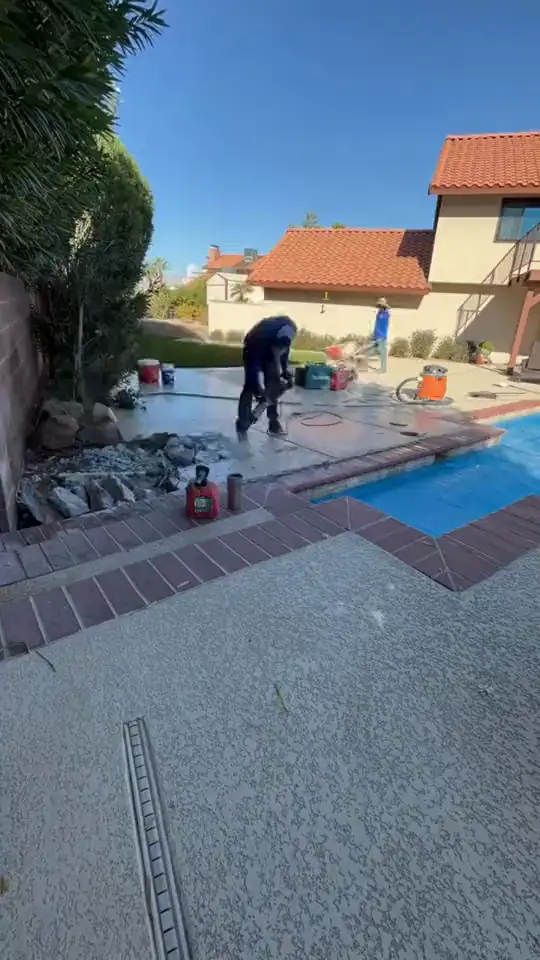
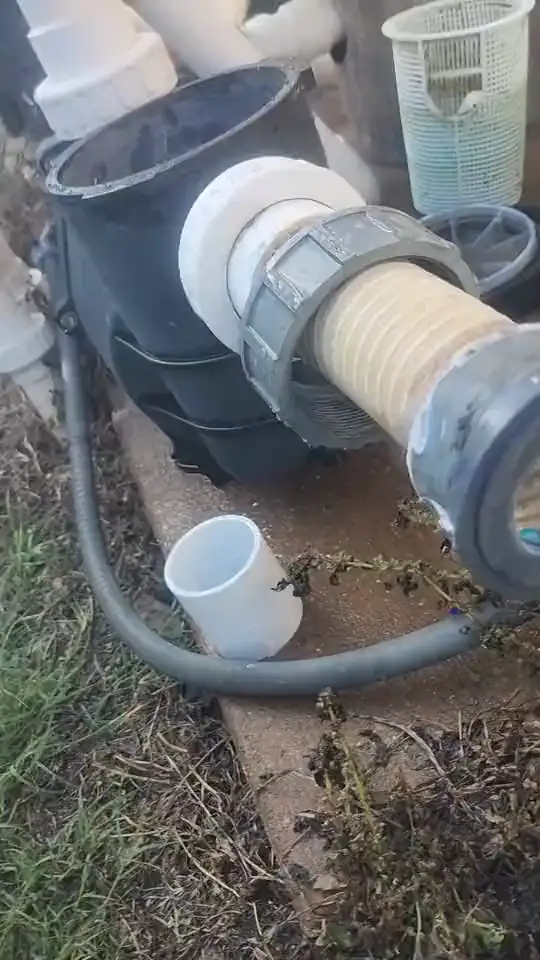

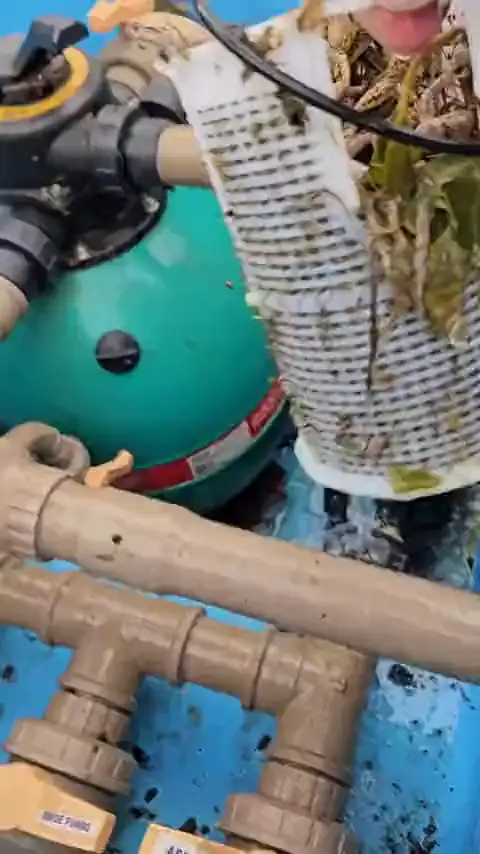
What the mark on the surface usually means
In each of them the visible damage is smaller than the damaged area underneath it.
The shell moved, the adhesive failed or the substrate went hollow. Re-gluing the tile that fell repairs none of that.

Smooth PVC and concrete do not bond watertight on their own. The penetration has to be opened, cleaned and sealed properly.

Exposed and assessed before anything is retiled. Tiling over a crack lets the same defect carry on through the new finish.
Repair and restoration services
Use these when you already know what kind of repair or restoration the pool needs.
Useful pool repair facts
Each one is a reason the repair is bigger, or smaller, than the mark you can see.
Repairs that turned into renovations

Hollow render and rust cut out, then the whole shell tiled.
Glendale
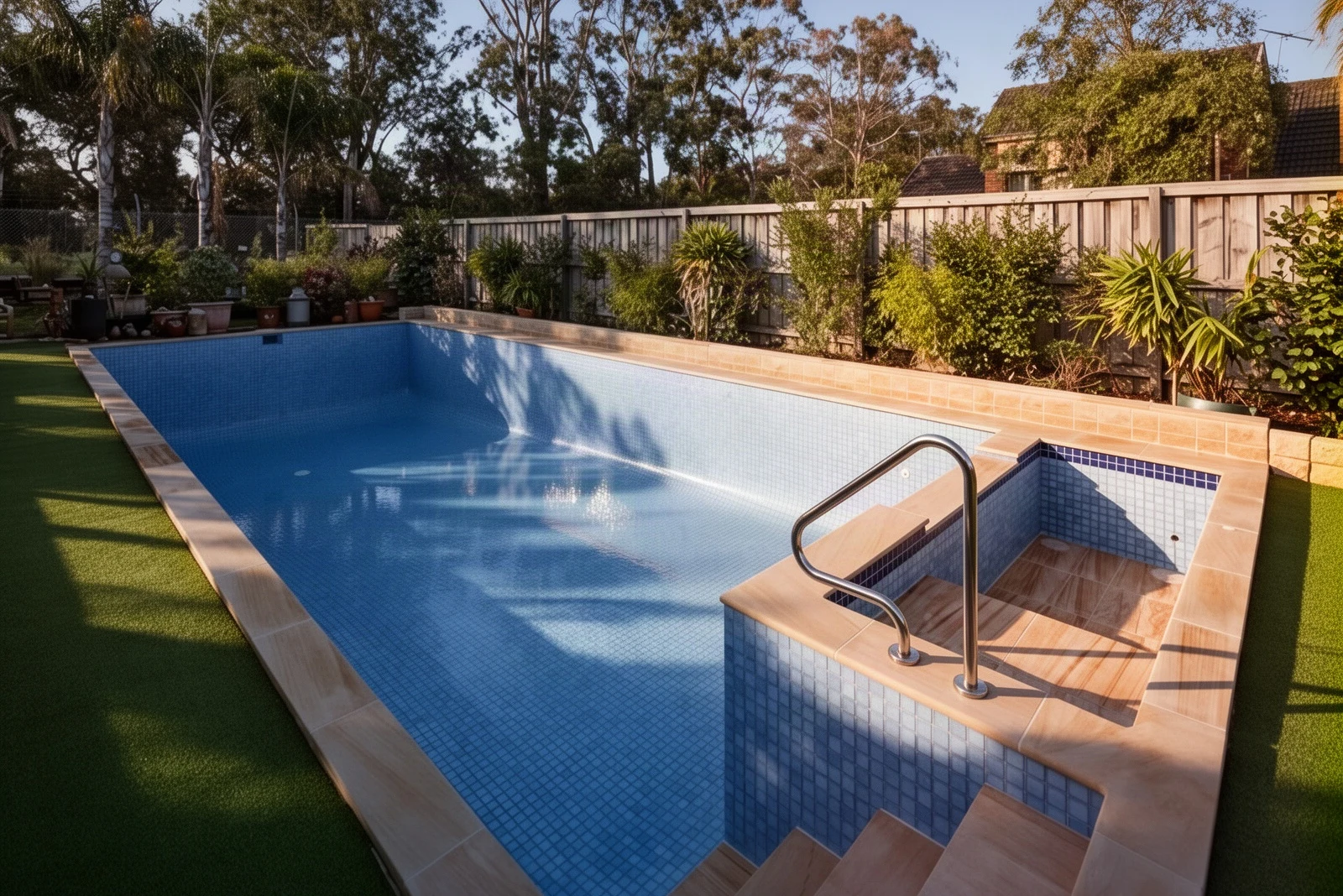
Out of repaints, so retiled, with sandstone paving around it.
Eagle Rock

Grey tile across pool and spa, seen from the air.
La Cañada Flintridge

Tell us what the pool needs, how big it is and your ZIP — and a price the same day.
Rewards
$100 for every friend you send us, up to two. No code, no form — they call and mention your name.

$100 credit
For every friend who calls and mentions your name
Up to two referrals, $200 in total. The name must come up on the first call. Spend it on any service.
20% off one-time work
For weekly maintenance members
Green-to-clean, acid wash, plaster start-up and repair labor, plus priority on the schedule.
Where we work
Send your name, the suburb, one photo of the whole pool and close-ups of the damage.
Office · Studio City
Text message is usually the fastest way to reach us. Photos tell us whether the repair falls inside our scope.
4121 Radford Ave, Ste. #214, Studio City, CA 91604Surfaces, methods, water balance and the words used when an older pool is restored.

Repairs, cracks, leaks, finishes, lights, equipment symptoms and scope.


Tiling, repainting, resurfacing, coping and the other ways to restore a pool.
Care guides, water balance and advice for looking after a renovated pool.
Every answer stays on the page; open only the one you need.
Often the water is travelling around the outside of the pipe rather than through a split inside it: smooth PVC and the surrounding concrete do not make a dependable watertight bond on their own. The penetration has to be exposed enough to find the water pathway, remove weak material and seal it correctly before the surface is rebuilt. Where the leak location has not been confirmed, professional leak detection comes first.
Movement, water penetration, failed bonding or a problem in the surrounding area. Once coping moves, moisture gets into the pool beam and the structure beside it. A lasting repair has to assess the bond, the beam, the substrate and whatever drainage or movement is feeding it — re-grouting a loose stone does not repair a failed bond underneath it. See coping repair and replacement.
Because the shell or render has moved, the adhesive system has failed, the substrate has gone hollow, or water is travelling behind the finish. When one tile comes loose, the tiles and render around it usually need checking too. Proper repair is more than re-gluing what fell: the unstable material has to come out so the new work bonds to something sound. Read about pool tiling and preparation.
If the pool loses more water than you would expect, have it investigated. Leaks come from cracks, pipe penetrations, light conduits, fittings, plumbing or structural movement, and most of those pathways are invisible from the poolside. We repair structural defects inside our scope once the leak has been located; detection itself and general equipment plumbing are separate specialist services. What to do before you call us about a leak.
Usually steel reinforcement, wire or another metal object inside the concrete has reached moisture. Rebar set too close to the surface corrodes and expands, which gives a round rust spot, a line of staining, cracking or delamination — and the visible mark is normally smaller than the damaged area behind it. Proper repair means opening the concrete, removing the rust-damaged material, treating or removing the steel and rebuilding before the finish goes back. Covering the stain with paint or waterproofing is not a structural repair. Read the pool rust repair page.
The crack is exposed, assessed and repaired first. Tiles and failed render come off so the shell and the full length of the crack can be seen. Depending on what is found and whether movement is still happening, the repair may involve stitching, epoxy injection, dowelling, reinforcement or rebuilding part of the area; then the surface is restored, waterproofed where required and retiled. Tiling straight over a crack lets the same defect carry on through the new finish. More crack and renovation answers.
Cement-based interiors lose their bond with age, moisture, movement or the way they were originally installed, and they show it by cracking, going hollow, delaminating or dropping pieces into the skimmer basket. Once the loss of bond is widespread, patching does not last, and full resurfacing is usually the long-term answer — but the shell, the cracks and the other defects are assessed before a new finish is chosen. See pool resurfacing options.
Hard water, high pH or water that has not been kept in balance. It shows as a white scale on tile, grout, coping or the interior itself. Cleaning improves the look of a sound surface, but unless the water balance is corrected and kept there, the calcium comes back — and heavy scale, staining and damaged finishes should be assessed before anything aggressive is tried on them. See our pool tile cleaning services.
Identify the stain before anyone scrubs, grinds or treats it: calcium, rust and general contamination have different causes and should not get the same treatment. If the surface underneath is sound, specialist cleaning can lift staining and scale. If the mark is being made by rusting steel, a crack, moisture or a failing interior, cleaning what you can see does nothing for the cause. Read about tile and surface cleaning.
No. We work on existing tiled, rendered and painted swimming pools with concrete shells, and the repair information on this page does not apply to fiberglass. If your pool is fiberglass, it is a different surface and a different repair system, and another specialist should look at it.
Cleaning, recovery, repair and renovation across Los Angeles.
Ready for an initial repair discussion?
One photo of the whole pool, close-ups of every damaged area, your suburb, and a note about water loss or movement.